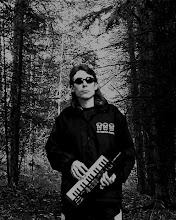
I'm including both of these classic Jean-Michel Jarre albums as a double feature. When I first heard them, they were issued as a double-LP (remember those?), and subsequently occupied opposite sides of a 90 minute cassette (remember those???). These were perhaps the most important albums to fuel my childhood synthesizer-cravings.
Let's start with Oxygene, which was released in 1977, and recorded at Jean-Michel Jarre's home studio. The equipment listed in the original liner notes is as follows (my comments in brackets): A.R.P. synthesizer, A.K.S. synthesizer, V.C.S. 3 synthesizer, R.M.I. Harmonic synthesizer, Farfisa organ, Eminent (310 Theatre Unique organ), Mellotron, Rhythmin' Computer (Korg Mini-Pops 7).
The string sounds on the album were from the Eminent organ, which has the distinction of being the first instrument equipped with a string synthesizer, before such an instrument was available stand-alone. It was run through an Electro-Harmonix Small-Stone Phaser pedal to give it the distinctive tone. The Korg Mini-Pops 7 rhythm machine had a built-in flaw that Jarre exploited to good effect: it could play more than one preset rhythm at once. Thus, on the iconic single Oxygene IV for instance, you can hear 'slow rock' and 'beguine' combined.
Oxygene IV, courtesy of alejandrodurand24.
Oxygene II is my favourite song from the album. Epic, sweeping, and somehow possessed of emotion, proving it's possible to be moved by a song made on machines!
Oxygene II, courtesy of jackrudybacks.
Oxygene III is a short track nestled between its better-known counterparts. Some evil-sounding discordant synths in the background, with a soaring theremin-like lead from the AKS (Jarre has played this part on a theremin at live shows).
Oxygene III, courtesy of oldiesfan520
Oxygene 7 used to crack me up when I was a kid. The sequenced percussion (from one of the ARPs?) sounded to me like a cat eating bikkies at double-speed. I fondly remember listening out for it whenever the album was played.
Oxygene V, courtesy of oldiesfan520

Equinoxe gear list: ARP 2600 Synthesizer, EMS Synthi AKS, VCS 3 Synthesizer, Yamaha CS60, Oberheim TVS-1A, RMI Harmonic Synthesizer, RMI Keyboard Computer, ELKA 707, Korg Polyphonic Ensemble 2000, Eminent, Mellotron, ARP Sequencer, Oberheim Digital Sequencer, Matrisequencer 250, Rhythmicomputer (Korg Mini-Pops 7 and Roland CR-78), EMS Vocoder.
While the mood largely continues in the vein of Oxygene, Jarre gets slightly more upbeat on tracks like Equinoxe 5.
Equinoxe 5, courtesy of ojciecnatoora.
The other single from the album was Equinoxe 4, perhaps the track with the most going on in it. Listen out for the excellent sample & hold bass warbles during the bridge.
Equinoxe 4, courtesy of kikkerfan.
Interesting melodies on Equinoxe 3. It reminds me of a medieval ballroom dance.
Equinoxe 3, courtesy of jaki386.
The epic Equinoxe 7. I always thought this would be a good final track for the album, but that honour goes to part 8, which is composed of two movements and could pass for two songs.
Equinoxe 7, courtesy of speedfreek67.